
A Normal Scan Does Not Always Mean a Healthy Brain
Key Takeaways: A brain injury from a car crash can be missed on a CT scan because CT mainly finds bleeding, swelling, and skull fractures, not microscopic damage like diffuse axonal injury or concussion. When symptoms continue after a normal CT, more sensitive tools such as MRI, susceptibility-weighted imaging, DTI, and newer blood biomarker tests may show what the first scan missed. New Mexico law defines brain injury to include closed head injuries caused by an outside physical force, and it recognizes impairments in memory, cognition, language, and behavior. Proving a hidden brain injury claim usually depends on medical, neuropsychological, and economic evidence that ties the crash to lasting harm, along with prompt follow-up care and consistent records. If a government vehicle was involved, the Tort Claims Act generally requires written notice within 90 days and a lawsuit within two years of the crash, and it limits damages. A late diagnosis generally does not reset these deadlines.
A brain injury from a car crash may not show up on a CT scan because CT is built mainly to find bleeding, swelling, and skull fractures, not microscopic damage to brain tissue. Many people leave the emergency room with a "normal" scan, only to struggle with memory, focus, and mood in the following weeks. One of the most common hidden injuries is diffuse axonal injury, where the brain’s nerve fibers stretch or tear during the violent acceleration and deceleration of a collision. If your symptoms do not match a clear CT result, the injury may still be real, and it may still be provable.
You do not have to sort out a hidden brain injury on your own. The trial lawyers at The Davis Kelin Law Firm work with injured New Mexicans and their families to investigate catastrophic crash injuries and build claims around solid medical evidence. Call 505-242-7200 or schedule a consultation today to talk about your situation.
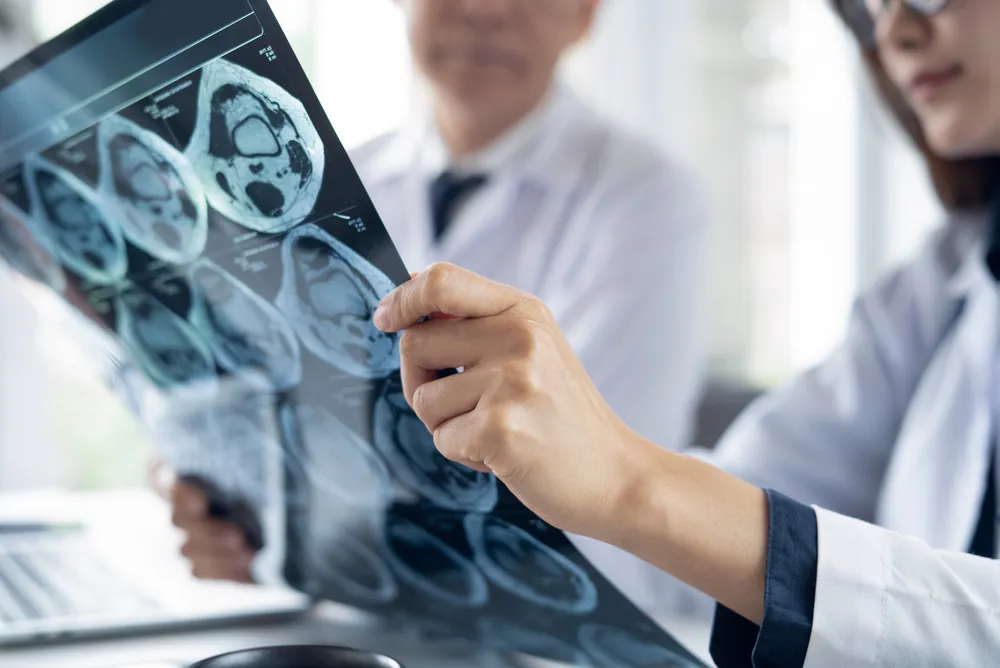
What CT Scans Can and Cannot See
A CT scan is a fast, valuable emergency tool, but it has real limitations. Emergency physicians rely on CT to rule out life-threatening problems like a brain bleed that may need surgery. According to research highlighted by Michigan Medicine’s Health Lab, conventional imaging does not capture every form of brain trauma.
Structural Damage vs. Microscopic Damage
CT finds large structural changes, while many traumatic brain injuries happen at the cellular level. Diffuse axonal injury and concussion often produce no visible bleeding or swelling, so the scan can look clean even though nerve connections have been damaged. A peer-reviewed TBI imaging study notes discrepancies between CT results and the underlying brain pathology, including subtle injuries like microhemorrhages.
Why Diffuse Axonal Injury Is So Easy to Miss
Diffuse axonal injury spreads across wide areas of the brain instead of forming one obvious lesion. In a crash, the brain shifts and rotates inside the skull, and shearing forces can strain thousands of tiny axons at once. Crash injury biomechanics research helps explain how these forces act on the body during a collision, and this doctoral research on brain injury adds further context.
Better Tools for Brain Injury Diagnosis
When symptoms persist after a normal CT, more sensitive testing may reveal what the first scan missed. These tools do not replace clinical judgment, but they can provide objective evidence that matters both medically and legally.
MRI and Advanced Imaging
MRI is generally more sensitive than CT for identifying subtle structural brain damage after trauma. Techniques such as susceptibility-weighted imaging can detect tiny bleeds associated with diffuse axonal injury. Diffusion tensor imaging (DTI) and functional MRI are being studied as ways to map damaged nerve pathways, but they are still largely research tools, and courts may scrutinize whether they are reliable enough to be admitted as evidence.
Blood Biomarker Testing
Blood tests that look for proteins released when brain cells are injured are now in clinical use and still being studied. The FDA has cleared tests for GFAP and UCH-L1, mainly to help decide whether a CT is needed after a mild head injury. They are not a standalone diagnosis, and their role when imaging looks normal is still being researched.
💡 Pro Tip: Keep a simple daily log of symptoms like headaches, forgotten conversations, word-finding trouble, or irritability. Ask a family member to add what they notice, since people with brain injuries often do not recognize their own changes.
How New Mexico Law Defines a Brain Injury
New Mexico law recognizes that a serious brain injury does not require an open wound or a visible fracture. Under NMSA 1978, § 27-1-16(F) (official source: nmlegis.gov), a brain injury definition includes an open or closed head injury caused by an insult to the brain from an outside physical force. This definition comes from the statute that sets up the state’s Brain Injury Services Fund, so it controls eligibility for those services, not liability in a personal injury lawsuit. Still, it reflects the reality that closed injuries can be disabling. If you are unsure how a closed injury differs from a concussion, this overview of closed head injury vs. concussion may help.
The same statute lists functional impairments that can follow a brain injury, and they closely match what crash survivors report. These areas include:
- Cognition, memory, attention, and information processing
- Language and speech
- Reasoning, abstract thinking, judgment, and problem solving
- Sensory perception, motor abilities, and physical functions
- Psychosocial behavior
This list helps explain why symptoms can matter as much as imaging. New Mexico also maintains a Brain Injury Services Fund under NMSA 1978, § 27-1-16(A)-(C) (official source: nmlegis.gov) to support a statewide program designed to increase independence for people with brain injuries.
Proving a Diffuse Axonal Injury Car Accident Claim
A diffuse axonal injury car accident claim generally depends on connecting the crash, the injury, and its effects through credible evidence. The at-fault party’s insurer may point to a normal CT and argue that nothing serious happened. Overcoming that argument usually requires proving negligence, causation, and damages. New Mexico’s pure comparative fault rule may also reduce a recovery by the injured person’s share of fault.
Building the Medical and Economic Record
Qualified medical and economic testimony is often central to a hidden brain injury case. Neurologists, neuropsychologists, and radiologists may explain how advanced imaging and testing support the diagnosis and why the early CT did not show it. Life care planners and economists can project future care costs and lost earning capacity.
A delayed diagnosis can complicate a claim, but it does not automatically defeat one. Gaps in treatment can give the defense room to argue that something else caused the symptoms. Prompt follow-up care and consistent documentation can help close those gaps.
💡 Pro Tip: Request copies of the actual imaging files, not just the written radiology reports. A later review of the original images by another physician may matter if the injury was overlooked.
Deadlines When a Government Vehicle Is Involved
If a city, county, or state vehicle caused your crash, special rules under the New Mexico Tort Claims Act may apply. Under NMSA 1978, § 41-4-2(B) (official source: nmlegis.gov), government liability standards rest on traditional duty and the reasonably prudent person standard, not strict liability. Immunity is waived only in specific situations, including negligent operation or maintenance of a motor vehicle by a public employee acting within the scope of duty (NMSA 1978, § 41-4-5). These cases come with shorter timelines and damage limits.
| Requirement | General Rule | Notable Exception |
|---|---|---|
| Written notice (NMSA 1978, § 41-4-16) | Within 90 days of the crash | Up to 90 days of injury-related incapacity may not count; actual notice may excuse it |
| Lawsuit filing (NMSA 1978, § 41-4-15) | Within 2 years of the crash | Children under 7 have until their 9th birthday |
| Damage caps (NMSA 1978, § 41-4-19) | Limits on medical and other damages per person and per occurrence; amounts depend on when the claim arose | No punitive damages |
The notice requirement under NMSA 1978, § 41-4-16 (official source: nmlegis.gov) is an administrative step separate from filing a lawsuit. The Tort Claims Act notice rule generally requires written notice of the time, place, and circumstances to the proper official, such as the risk management division for state claims, the mayor for city claims, or the county clerk for county claims. Missing it can bar the claim unless the government had actual notice.
The lawsuit deadline under NMSA 1978, § 41-4-15(A) (official source: nmlegis.gov) generally runs from the date of the crash, not the date of diagnosis. That means an MRI that confirms a two-year filing deadline injury months later generally does not reset the clock. The government damage caps under NMSA 1978, § 41-4-19 (official source: nmlegis.gov) may fall short of lifelong care costs, which makes identifying every potentially responsible party important. Claims against private drivers generally follow a three-year deadline under NMSA 1978, § 37-1-8.
If a provider’s negligence caused the missed diagnosis, a separate deadline may apply. For qualifying health care providers, NMSA 1978, § 41-5-13 (official source: nmlegis.gov) sets a medical malpractice deadline that generally requires filing within three years of the negligent act, an occurrence-based rule rather than one based on the date of discovery. Since a 2021 amendment effective January 1, 2022, minors and incapacitated persons instead have one year from reaching the age of majority or from the termination of the incapacity to file, rather than the older rule that gave minors under six until their ninth birthday.
Frequently Asked Questions
Can I have a brain injury if my CT scan was normal?
Yes, in many cases. CT mainly detects bleeding, swelling, and fractures, while diffuse axonal injury and concussion may involve microscopic damage that CT cannot see.
What test is better than a CT for diffuse axonal injury?
MRI is generally more sensitive, particularly with techniques like susceptibility-weighted imaging. DTI is promising but still mostly used in research.
Does a late diagnosis extend my deadline to file a claim?
Generally, no. The two-year Tort Claims Act deadline generally runs from the crash date. The deadline for claims against private parties is generally three years from the injury.
How do I prove a hidden brain injury caused by a car crash?
Claims usually rely on medical records, advanced imaging, neuropsychological testing, testimony from family and coworkers, and qualified medical and economic witnesses who connect the crash to lasting harm.
Are damages limited if a government driver caused my crash?
Generally, yes. The Tort Claims Act caps certain damages and bars punitive damages, so these claims require careful evaluation of all responsible parties.
Moving Forward After a Hidden Brain Injury
A clean CT scan does not settle whether a car crash injured your brain. Diffuse axonal injury and other traumatic brain injuries can stay hidden on early imaging while changing a person’s memory, personality, and ability to work. More sensitive testing, careful documentation, and attention to New Mexico’s deadlines can make a real difference in how a claim develops.
If your family is living with the effects of a brain injury that doctors first missed, talking with a diffuse axonal injury car accident lawyer can help you understand your options. The Davis Kelin Law Firm offers experienced trial lawyers, works on a no fee unless we win basis, and is prepared to take cases to verdict when needed. Call 505-242-7200 or contact our trial lawyers to schedule a consultation today.
Disclaimer: This content is for informational purposes only and is not legal advice. Every case is unique, and results may vary. Consult an attorney about your specific circumstances.